The Cheat Code: How Thai Gen Z Musicians Are Cracking the Western Market One Viral Moment at a Time
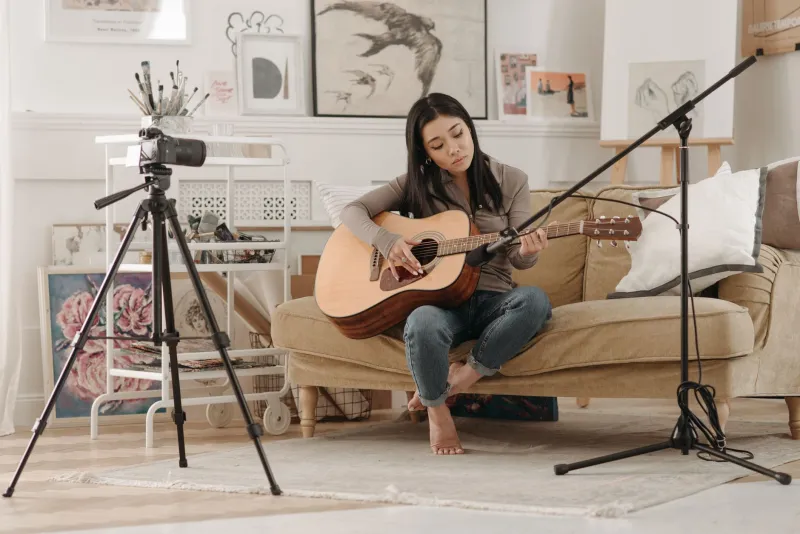
For decades, breaking into the American music market meant one thing: move to LA, sign with the right label, and hope a radio programmer somewhere in the Midwest decides you're worth thirty seconds of airtime. That pipeline? Increasingly irrelevant. And nobody knows this better than the wave of Thai Gen Z artists who are engineering their own crossover moments from Bangkok bedrooms, Chiang Mai home studios, and co-working spaces in Thonglor.
They're not waiting to be discovered. They're building algorithms in their favor — and the results are starting to show up in places the industry didn't expect.
The TikTok-First Mindset That's Changing Everything
Ask any emerging Thai artist under 25 about their release strategy, and the conversation almost always starts with TikTok before it ever gets to Spotify. That's not an accident — it's architecture.
Producers and artists working in Bangkok's indie scene have become fluent in what some are calling "hook engineering": the deliberate crafting of a song's most emotionally resonant fifteen seconds to function as a standalone piece of content. Think of it less like a single and more like a trailer for your own vibe.
"We don't think about the full song first anymore," says one Bangkok-based producer who has worked with several emerging Thai acts now gaining traction in US indie circles. "We think about the moment — the five seconds where someone stops scrolling. Then we build the song around that."
This approach has paid off in concrete ways. Several Thai artists have watched their SoundCloud plays remain flat for months, only to see streams explode overnight after a TikTok clip hits a certain threshold of saves and shares in the US and UK markets. The algorithm, it turns out, doesn't care about geography. It cares about retention.
Bilingual as a Feature, Not a Compromise
One of the most interesting strategic moves happening in Thai pop right now is the deliberate use of bilingual songwriting — not as a compromise to appeal to Western ears, but as an actual sonic identity.
Where K-pop acts often opt for English-language bridges or full English versions of their biggest hits, some Thai artists are leaning into the texture of Thai lyrics as an aesthetic element. The tonal quality of the Thai language — its melodic rises and falls — creates a sonic signature that producers are increasingly treating as a production asset rather than a barrier.
At the same time, many artists are pairing Thai verses with English hooks, creating entry points for Western listeners without flattening the cultural specificity that makes the music interesting in the first place. It's a balance that requires real craft — and when it works, it works loudly.
One rising Thai singer-songwriter, whose debut EP has been circulating in US indie playlists over the past year, described the approach simply: "I want American listeners to feel something before they understand every word. That's how it works when you hear a great French song or a great Spanish song. The emotion comes first."
Strategic Collabs and the Feature Economy
If TikTok is the spark, collaborations are the gasoline. Thai artists breaking into Western spaces have become savvy about the feature economy — the way a single guest verse or production credit from a credible Western artist can unlock an entirely new audience overnight.
But the strategy goes deeper than just chasing clout. The most thoughtful crossover moves happening right now involve Thai artists identifying micro-communities within the US market — lo-fi listeners, bedroom pop fans, alternative R&B heads — and finding collaborators who already speak to those communities authentically.
This hyper-targeted approach means a Thai artist doesn't need to conquer mainstream American radio to build a meaningful, monetizable US fanbase. They need to matter deeply to a specific pocket of listeners — and social media makes that kind of precision possible in a way it never was before.
TikTok strategists working with Thai acts describe a process that looks almost scientific: identifying which US cities have the highest engagement rates for a given sound, which content creators in those markets are most likely to organically pick up a track, and how to sequence a rollout so that organic momentum builds before any paid promotion kicks in.
"The days of throwing money at ads and hoping something sticks are kind of over for independent artists," says one digital marketing consultant who works primarily with Southeast Asian musicians targeting English-language markets. "The artists who are winning right now are the ones who understand community-building. They're not broadcasting — they're having conversations."
Keeping It Real While Going Global
Here's where things get genuinely complicated — and genuinely interesting. The crossover playbook has real risks baked in, and the most self-aware Thai artists are wrestling with them openly.
There's a version of this story where "breaking the Western market" means sanding down everything culturally specific until what remains is a globally palatable product that could have come from anywhere. That version isn't interesting, and increasingly, it isn't even effective. Western audiences — particularly the Gen Z listeners who are actively seeking out music from outside the Anglo-American bubble — can smell inauthenticity from a mile away.
The Thai artists gaining real traction in the US aren't the ones who sound the most American. They're the ones who sound the most like themselves, with enough sonic fluency to translate their world into something emotionally accessible across cultures.
That distinction matters. It's the difference between appropriating a genre and contributing to it — between chasing a trend and setting one.
Some artists are leaning into specifically Thai cultural references — regional festivals, local street food culture, the particular emotional landscape of Bangkok at 2 AM — and finding that these hyper-specific details resonate with American listeners precisely because they're specific. Universality, it turns out, often lives inside particularity.
What Comes Next
The Grammy conversation is still mostly hypothetical for this generation — but it's less hypothetical than it was two years ago. The Recording Academy has been expanding its international categories, and the broader industry is slowly reckoning with the fact that "global music" can no longer be treated as a niche.
More practically, the infrastructure for Thai artists to build real careers with real US revenue streams is materializing in real time. Streaming royalties, sync licensing for TV and film, Patreon-style fan support platforms, and live touring to diaspora communities across cities like LA, Houston, and New York are all part of an ecosystem that didn't exist at this scale even five years ago.
The generation of Thai musicians coming up right now didn't inherit a road map for any of this. They're drawing it themselves — one viral moment, one strategic collaboration, one carefully engineered hook at a time.
And honestly? The rest of the industry should probably be taking notes.